
Cardiac rehabilitation, often shortened to cardiac rehab, is the part of recovery that helps you move from treatment into real life again. It is not only about exercise. It is also about confidence, education, reassurance, making lifestyle changes, pacing, and learning how to return to activity in a way that feels structured rather than alarming. In the UK, cardiac rehabilitation is commonly described as a programme of exercise, education and support after a heart event, diagnosis or procedure.
For many people, this is the point where things start to feel unclear. You may have been told that you are medically stable, but you do not feel fully confident in your body yet. You may be waiting for support, unsure whether you qualify, or wondering what happens when the formal part ends. That is exactly where a good cardiac rehabilitation pathway matters, because recovery is not just about being discharged, it is about knowing how to move forward safely.

What Cardiac Rehabilitation Actually Means
In plain English, cardiac rehabilitation is a structured way to help you recover and rebuild after a heart-related event or diagnosis. That might include supported exercise, information about recovery, help understanding what is normal, emotional support, and guidance on returning to day-to-day activity. The aim is not simply to get you moving; it is to help you do so with more confidence and less guesswork.
That matters because recovery can feel oddly uneven. A person can look fine on the outside and still feel cautious, flat, uncertain, or spooked by every sensation. A structured rehab approach helps create a bridge between hospital care and ordinary life. Instead of being left to figure everything out alone, you have a framework.
It is also worth saying that cardiac rehabilitation does not have to mean one single format. Some programmes are hospital or community-based. Some include home-based options. Some people go through a formal NHS pathway, then later continue with long-term support in a Phase 4 setting.
The Four Phases Of Cardiac Rehabilitation
Cardiac rehabilitation in the UK is commonly described in four phases. Different services may explain them slightly differently, but the general model is widely recognised.
For a fuller breakdown of how each phase works, read Cardiac Lauren’s detailed guide to the 4 Phases of Cardiac Rehab.
Phase 1
This is the early stage, usually while you are still in hospital or just beginning recovery. It often involves basic information, reassurance, and very early guidance about what recovery may look like next.
Read the full guide to Phase 1 hospital care for what to expect in this stage.
Phase 2
This is the return home stage. You are out of the acute setting, but still early in recovery. People often need advice, check-ins, and help understanding what is appropriate while confidence is still fragile.
Read the full guide to Phase 2 outpatient care for practical next steps at home.
Phase 3
This is the more structured rehabilitation stage that many people think of when they hear the term cardiac rehab. It often includes supervised or guided exercise, education, and support to help you return to activity more safely.
Read the full guide to Phase 3 exercise and education to understand structured rehab support.
Phase 4
This is the long-term continuation stage. It is usually about maintaining progress, building routine, and continuing safe exercise habits after the more formal stage has ended. Some services offer this directly, and in other cases, people continue through community or specialist programmes.
Why People Often Feel Stuck After Discharge
This is probably one of the least talked about parts of recovery. Being told you are stable is not always the same as feeling safe.
A lot can happen in that gap. You may feel unsure what level of activity is sensible. You may notice every flutter, every change in breathing, every ache, and not know whether to ignore it, monitor it, or stop everything. Some people get mixed messages from different sources. Others lose momentum because there is a wait before the next stage starts. And some, quite honestly, become frightened of doing the wrong thing.
None of that means you are failing. It usually means you are in a very human stage of recovery where certainty feels thin on the ground.
This is one reason cardiac rehabilitation matters so much. It gives shape to a period that can otherwise feel vague. Instead of recovery being reduced to “take it easy” or “build back up”, you have a clearer path. Not perfect certainty, perhaps, but something much better than guessing.
If you are specifically looking at structured early recovery support, Cardiac Lauren also explains more about Phase 3 exercise and education.
What Safe Progress Looks Like In Real Life
Safe progress usually looks much less dramatic than people expect. It is not about proving yourself. It is not about pushing hard because you had one good day. It is not about trying to win your old fitness back in a week.
In real life, safety often looks like structure and consistency.
That means using an approach where the session itself is organised, effort is controlled, and progress is built steadily. Warm-up and cool-down matter here, not as optional extras, but as part of the safety system. In practice, a good home-based cardiac rehab plan should build in dedicated warm-up and cool-down periods, not treat them like optional extras that can be skipped.
It also helps to use a simple effort scale, such as RPE, so that activity is guided by controlled effort rather than emotion or impulse. The point is not to chase intensity. The point is to make activity feel manageable, repeatable, and less intimidating over time.
That is a very different mindset from the all-or-nothing pattern many people fall into. Too much on a good day, too little after a wobble, then confidence drops again. A better approach is steady exposure to safe, structured movement, repeated often enough that it starts to feel normal again.
(RPE) The Rating of Perceived Exertion Scale
The RPE (Rating of Perceived Exertion) Scale is a way to monitor yourself while exercising. By using it, you know you are exercising at the correct and safe level for you.
What If You Do Not Qualify For NHS Cardiac Rehabilitation
Availability and eligibility can vary, and that can leave some people feeling a bit lost. NHS England’s commissioning standards set out priority groups when capacity is below demand, which means access is not always identical from one area to another.
That is not a criticism of services, it is simply the reality that pathways can differ. Some people are referred quickly. Some wait. Some are unsure whether their diagnosis or situation fits the local criteria. Some complete one stage, then discover there is less support than they expected afterwards.
If that is you, the practical next step is usually to go back to basics. Ask your clinical team what support is available in your area, whether you need a referral, what phase you are considered to be in, and what level of exercise guidance is appropriate for you.
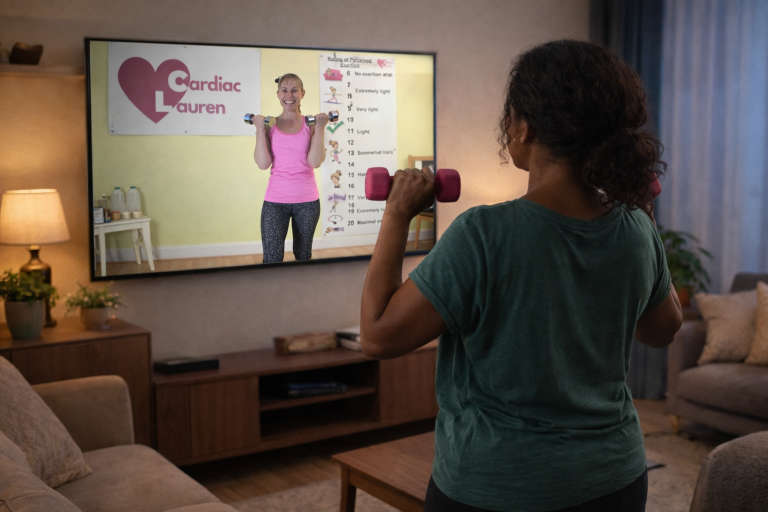
If you have been told you are ready for ongoing activity, but do not have a clear structure to follow, it can help to look for a programme designed specifically for long-term cardiac rehab style support.
The key thing is not to let the absence of a neat pathway push you into doing nothing, or into doing too much too soon. Structure still matters, even if you have to look a little harder to find it.
Online Support And Phase 4
Phase 4 usually refers to the long-term stage of cardiac rehabilitation, where the focus shifts towards maintaining progress, staying active, and continuing to build confidence once the more formal rehab period has finished.
This is where online support can make a lot of sense for some people. Not because online is magical, it is not, but because it can make structured continuation easier to access. It removes travel barriers, helps people stay consistent, and can provide a familiar weekly rhythm.
Cardiac Lauren is built around this idea of structured continuation. It offers online Phase 4 cardiac rehab style support for people recovering from a cardiac event who want guidance, routine, and a safer way to keep moving forward. Lauren is a BACPR certified exercise professional, and the focus is on ongoing support and consistency rather than quick fixes.
That is really the right way to think about this stage. Not as a dramatic transformation, but as a sensible continuation. Less guessing, more routine. Less stop-start. More confidence is built through repetition.
FAQs
Cardiac rehabilitation is a programme of exercise, education and support designed to help people recover after a heart event, diagnosis or procedure.
It varies. Different phases happen at different points in recovery, and the length of formal support can differ by service and by individual need.
Phase 4 is the longer term continuation stage, where people maintain progress and continue exercising with appropriate structure and support after earlier rehab stages.
In some cases, yes. Home based cardiac rehab options do exist, but they should follow guidance from your rehab team or clinical professionals.
That is common after a heart event or diagnosis. Anxiety does not automatically mean you are doing something wrong, but it does mean structure, reassurance and appropriate guidance become even more important.
Often, yes, for formal NHS cardiac rehabilitation pathways, but local arrangements can vary. If you are unsure, ask your hospital team, GP or cardiac team what applies in your area.
No. It usually includes education, support and help with returning to normal life, not only physical activity.
That is often where Phase 4 style support becomes relevant, helping you continue safely and consistently after the more formal stage ends.
Next Steps
If you are still early in recovery, start by understanding where you are in the pathway. Read the guide to the 4 phases of cardiac rehab, and speak to your clinical team about what stage you are in and what support is appropriate for you.
If you are ready for long-term structure, especially after Phase 3 or if you have been left in that awkward in-between stage, explore Cardiac Lauren’s online Phase 4 support. It is a calm next step for people who want guidance, routine and safety, rather than trying to piece recovery together on their own.