
Cardiac Rehab Warm-Up: What to Expect (Phase 4 Exercise Guide)
Learn why warming up properly is one of the most important parts of exercising safely after a heart attack, heart surgery or with a heart condition.
By Lauren Walker, Level 4 BACPR Cardiac Rehabilitation Exercise Specialist.
A cardiac rehabilitation warm-up should last 10-15 minutes. It gradually raises heart rate and blood flow through joint mobilisation, leg movement and light stretching, reducing the risk of dizziness, breathlessness or angina symptoms once exercise intensity increases.
If you’ve ever exercised with me at Cardiac Lauren, you may have noticed that my warm-ups are much longer than those in a typical fitness class.
That’s completely intentional.
As a cardiac rehabilitation exercise specialist, my priority is helping you exercise safely and confidently. A proper warm-up prepares your heart, muscles, joints and mind for exercise, reducing the likelihood of feeling unwell and helping you get the most from every workout.
Whether you’ve had a heart attack, heart surgery, angioplasty, stent, heart failure, atrial fibrillation (AF) or another cardiac condition, a gradual warm-up is an essential part of exercising safely.
Why is warming up important before exercise?
A warm-up allows your body to adjust gradually from rest to exercise.
Instead of suddenly asking your heart and muscles to work harder, you slowly increase the demands on your body. This gives your cardiovascular system time to adapt naturally.
Without an appropriate warm-up, some people may experience:
- Feeling light-headed or dizzy
- Becoming breathless more quickly
- Feeling uncomfortable during exercise
- Angina symptoms
- Heart palpitations (for those who are prone to them)
Think of it like driving a car on a cold morning. You wouldn’t immediately drive at motorway speed the second you start the engine. You give everything a chance to get going first.
Your body works in much the same way.
Every Cardiac Lauren warm-up is different
Although every warm-up follows the same evidence-based principles used in cardiac rehabilitation, no two classes are exactly the same.
That’s because every Cardiac Lauren class has its own goal.
For example:
- A low-intensity recovery class requires a gentle warm-up.
- A cardiovascular class gradually prepares you for more continuous movement.
- A resistance class focuses more on preparing the muscles and joints for lifting weights or resistance bands.
- Balance and flexibility classes have their own specific warm-ups.
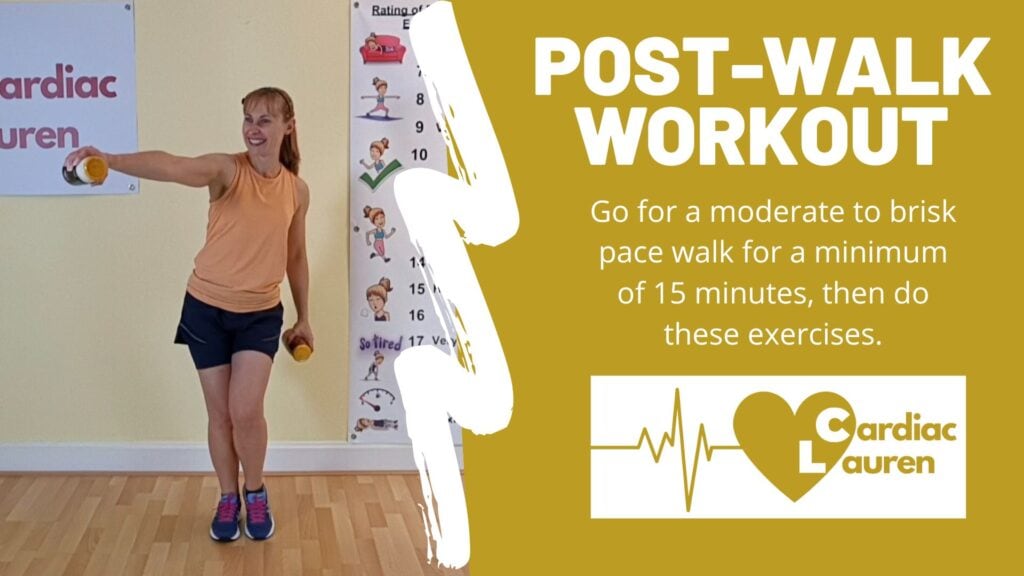
- My popular Post-Walk Workout is unique because your walk is your warm-up before returning home to complete the exercise class.
Matching the warm-up to the class helps your body prepare for exactly what it is about to do.
What happens during a Cardiac Lauren warm-up?
Every warm-up follows a gradual progression.
1. We begin by mobilising the joints
The first few minutes involve gentle movements for joints that often become stiff.
These commonly include:
- Neck
- Shoulders
- Wrists
- Spine
- Hips
- Knees
- Ankles
Joint mobilisation improves movement, reduces stiffness and prepares your body for larger movements later in the session.
2. We get your legs moving first
One thing many members notice is that we usually begin with the legs before adding arm movements.
There’s a simple reason for this.
Your legs contain some of the largest muscles in your body. As they begin working, they help increase blood flow to the muscles you’ll be using during exercise and allow your heart and circulation to adapt gradually.
Starting this way provides a comfortable transition from resting to exercising.
3. We keep the feet moving
If you’ve attended hospital or community cardiac rehabilitation, you’ll probably remember being encouraged to keep your feet moving.
That’s because your calf muscles act as a natural pump.
Every step, toe tap or march helps squeeze the veins in your legs, encouraging blood to return to the heart more efficiently.
This supports healthy circulation during exercise and helps reduce blood pooling in the lower legs.
Your breathing also contributes to this process. Maintaining a relaxed, natural breathing pattern helps your body work efficiently throughout the warm-up.
4. We gradually add arm movements
Once the legs are moving comfortably, we begin introducing upper-body movements.
These might include:
- Bicep curls
- Shoulder rolls
- Forward reaches
- Side reaches
- Gentle arm lifts
Initially, the arms usually stay around shoulder height before progressing further if appropriate.
This gradual approach allows your body to adapt naturally as your heart rate slowly increases.
5. Sometimes we include stretching
Some warm-ups include gentle stretching.
Stretching helps improve flexibility, reinforces good movement patterns and prepares muscles for exercise.
Unlike a flexibility session, however, stretches during a warm-up are held only briefly before returning to movement so that your body continues warming up effectively.
6. We practise the exercises you’ll soon perform
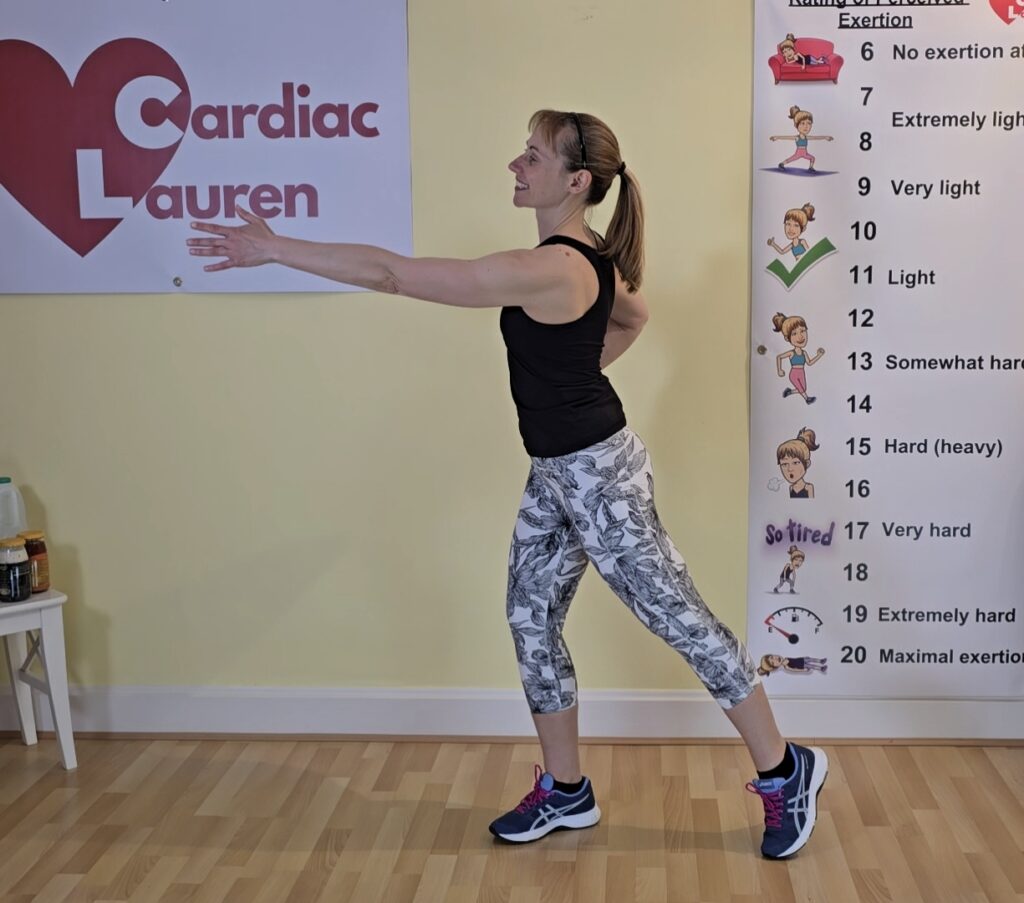
Towards the end of the warm-up, you’ll notice that many of the movements begin to resemble the exercises in the main class.
This is deliberate.
Practising the movements first allows you to:
- Build confidence
- Improve technique
- Feel more coordinated
- Exercise more safely once the workout begins
That’s another reason every Cardiac Lauren warm-up is unique.
Even if an exercise appears in several classes, it may be performed differently depending on that day’s theme.
Why are Cardiac Lauren warm-ups around 15 minutes?
One of the questions I’m asked most often is:
“Why are your warm-ups so much longer than other online exercise classes?”
The answer is simple.
Cardiac rehabilitation recommends allowing plenty of time for the body to adjust before exercising at higher intensities.
That’s why I aim for a warm-up of around 15 minutes whenever possible.
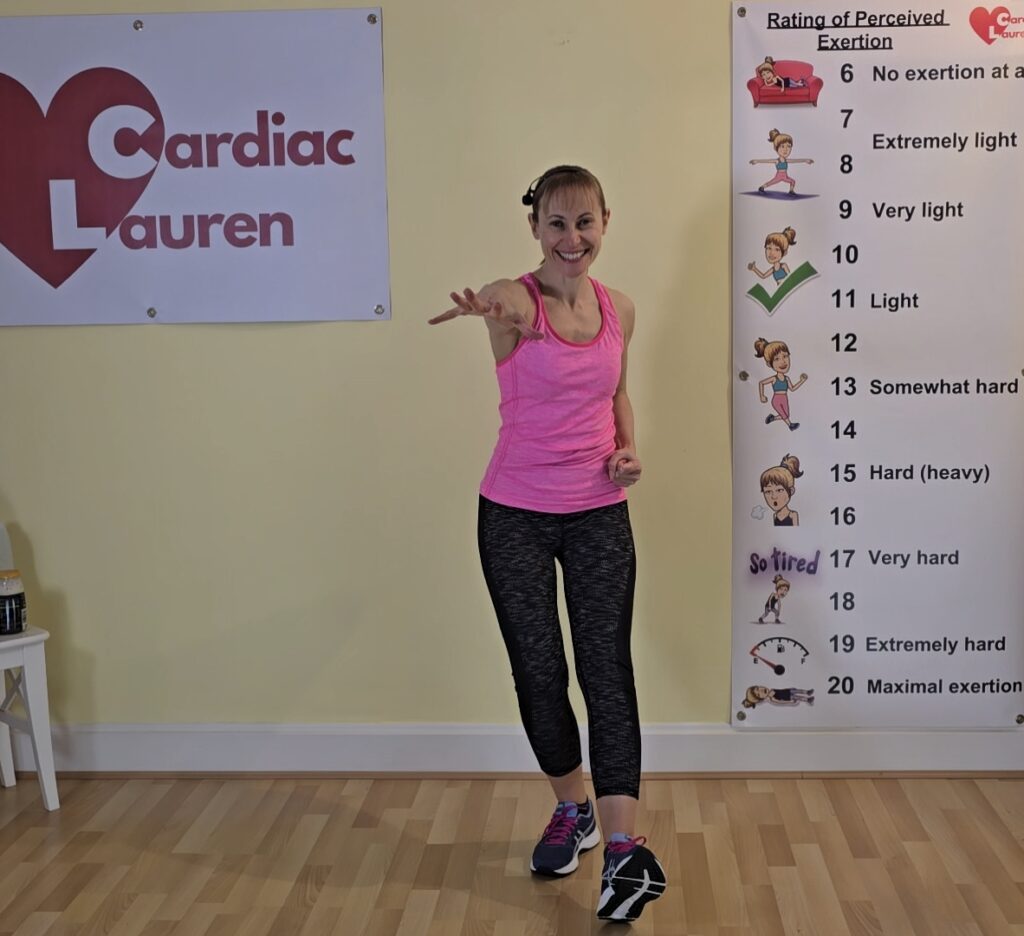
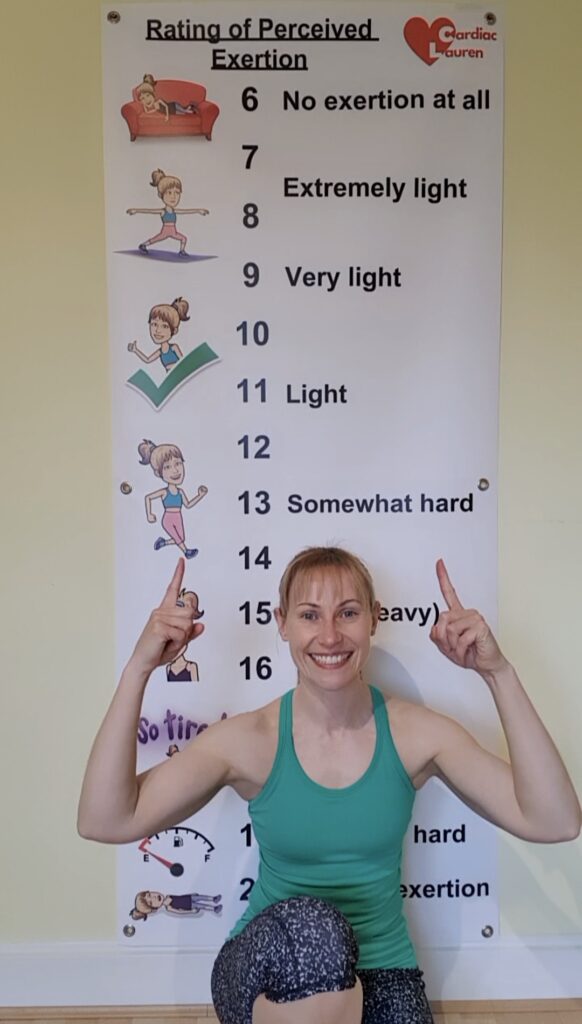
Throughout the warm-up, we also use the Rate of Perceived Exertion (RPE) Scale, helping you monitor how hard you’re working.
During the warm-up, you’ll usually be working between RPE 6 and 11, with the main exercise session beginning from around RPE 11, depending on the class you’ve chosen.
What about my 30-minute classes?
I know life can be busy, and many members appreciate shorter workouts.
For those classes, I still include a warm-up of at least 10 minutes. Rather than stopping one section and starting another, I gradually blend the end of the warm-up into the beginning of the workout so the transition feels seamless while still preparing your body properly.
Frequently Asked Questions
How long should a cardiac rehabilitation warm-up be?
A warm-up in cardiac rehabilitation is typically around 10 to 15 minutes, allowing the heart and circulation to adapt gradually before exercise becomes more demanding.
Should I warm up before every exercise session?
Yes. Whether you’re walking, cycling, exercising at home or attending a cardiac rehabilitation class, warming up before exercise and cooling down afterwards are important parts of exercising safely.
Why do Cardiac Lauren warm-ups change every week?
Every class has a different focus, so each warm-up prepares you for the movements you’ll perform during that session. This keeps the classes interesting while ensuring your body is ready for the exercises ahead.
Can I skip the warm-up?
I wouldn’t recommend it. The warm-up is an essential part of every Cardiac Lauren class and is there to help prepare your body for exercise as safely as possible.
The Cardiac Lauren approach
A warm-up isn’t simply something to get through before the “real” exercise starts.
It is part of the exercise session.
Every Cardiac Lauren warm-up is carefully designed to prepare your heart, muscles, joints, circulation and confidence, helping you exercise safely while enjoying every class.
If you’re looking for safe, enjoyable online exercise classes designed specifically for people living with heart conditions, I’d love you to join our friendly community.
Discover Cardiac Lauren Membership today
Author
Lauren Walker, Level 4 Cardiac Rehabilitation Exercise Specialist with the BACPR since 2005
BACPR ESA Committee member – since 2026 (Exercise Specialist Alliance)