
Cardiac rehab cool-down: Why It Matters (Phase 4 Exercise Guide)
Discover why every Cardiac Lauren class finishes with a structured cool-down and how it helps your body recover safely after exercise.
By Lauren Walker, Level 4 BACPR Cardiac Rehabilitation Exercise Specialist.
A cool-down after cardiac rehabilitation exercise should last at least 10 minutes. It allows your heart rate, breathing and circulation to return gradually to resting levels, reducing the risk of dizziness or a sudden drop in blood pressure. This guide explains why cool-downs matter and what a safe one includes.
When people think about exercise, they usually focus on the workout itself.
However, in cardiac rehabilitation, the cool-down is just as important as the warm-up. In fact, for some people, it can be one of the most important parts of the entire exercise session.
At Cardiac Lauren, I never simply stop the class after the final exercise. Every session finishes with a gradual cool-down that allows your heart, circulation, breathing and muscles to recover safely.
What is a cool-down?
A cool-down (sometimes called a warm-down) is the final part of an exercise session.
Its purpose is to help your body gradually return towards its resting state rather than stopping suddenly.
Following exercise, your heart is still beating faster than normal, your breathing is elevated, and your muscles are working harder than they were before you started. Giving your body time to recover gradually helps make this transition much more comfortable.
Ideally, a cool-down should last at least 10 minutes, although the exact length depends on the type of exercise you’ve been doing.
Why is cooling down important after exercise?
During exercise, your heart pumps more blood around your body to supply your working muscles with oxygen.
If you suddenly stop moving, your circulation doesn’t instantly return to normal. Your body still needs time to adjust.
A gradual cool-down helps your:
- Heart rate return towards its resting level
- Blood pressure return to its resting level
- Breathing become slower and more relaxed
- Blood circulation continue efficiently while your body recovers
- Muscles begin recovering after exercise
- Body transition comfortably from exercise back to rest
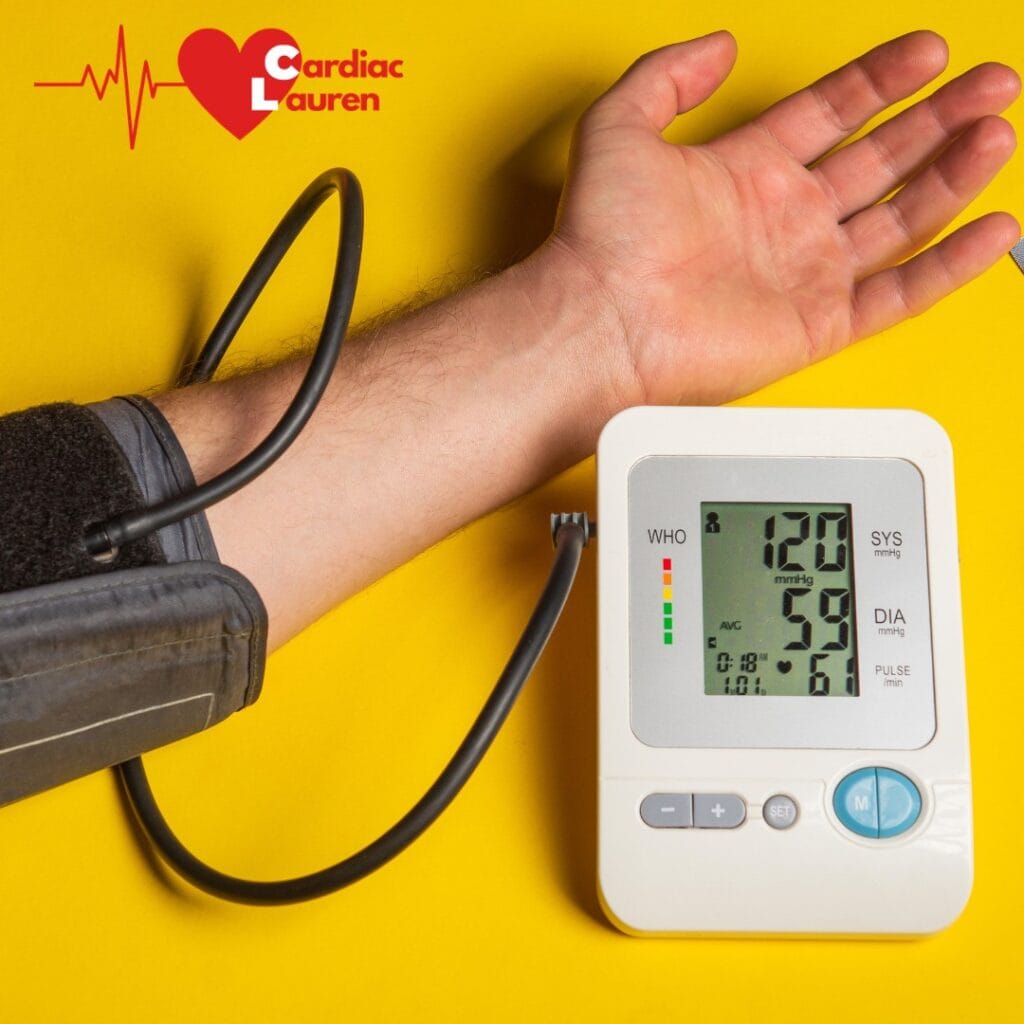
The recovery period after exercise is an important part of cardiac rehabilitation, which is why we never rush it.
How do we begin the cool-down?
The first thing we do is simply keep moving.
After the final exercise, we don’t stop and sit down. Instead, we spend a few minutes walking gently around the room.
This gentle movement allows you to:
- Catch your breath
- Gradually lower your heart rate
- Continue supporting healthy circulation
- Take on fluids if you’ve been sweating
- Prepare your body for stretching
I also encourage members to drink regularly throughout the class and again during the cool-down to replace any fluids lost during exercise.
Why does the walking continue?
You’ll often hear me reminding everyone to keep your feet moving.
This is because your calf muscles act as a natural pump.
Every step, toe tap or gentle march helps squeeze the veins in your legs, encouraging blood to return towards your heart.
Keeping your feet moving during recovery supports healthy circulation and can help reduce the likelihood of feeling light-headed when exercise finishes.
Even if someone needs to sit down during the cool-down, I still encourage gentle ankle movements or toe taps for exactly the same reason.
Does every Cardiac Lauren cool-down look the same?
Not at all.
Just like my warm-ups, every cool-down is matched to the class you’ve just completed.
For example:
- After a gentle mobility or stretching session, the cool-down may be slightly shorter.
- After a cardiovascular or higher-intensity class, we’ll spend longer gradually reducing the intensity before stretching.
The harder you’ve worked during the exercise session, the more gradually we want your body to recover.
When do we start stretching?
Once everyone’s breathing has settled and the intensity has reduced, we’ll begin stretching.
We often start with the upper body before moving on to the lower body.
The stretches I choose depend on the exercises we’ve performed during that particular class.
For example, we may stretch the:
- Shoulders
- Chest
- Triceps
- Back
- Calves
- Hamstrings
- Quadriceps
- Hip muscles
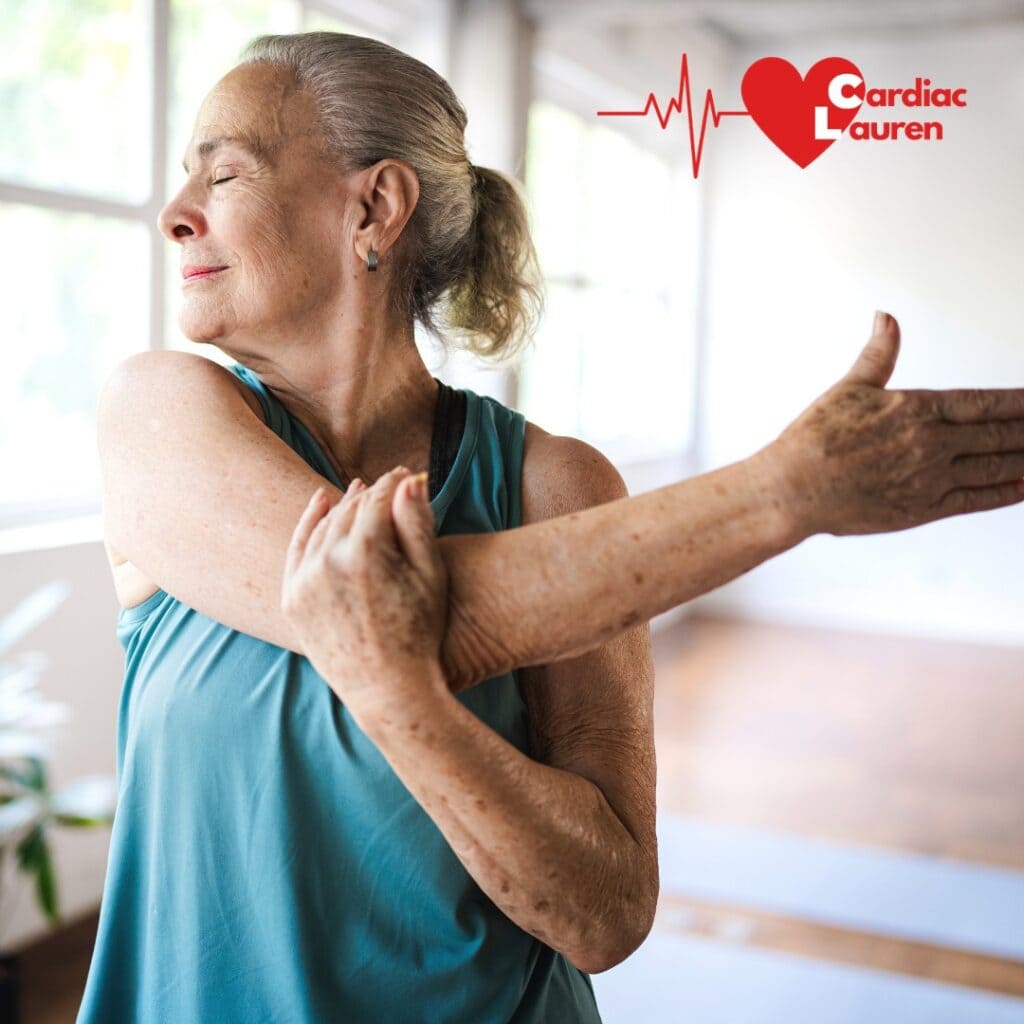
Throughout the stretching section, I continue reminding everyone to breathe naturally and keep the feet gently moving whenever appropriate.
There’s no need for exaggerated deep breathing. Relaxed, comfortable breathing is all your body needs.
Can stretches be done sitting down?
Absolutely.
Many lower-body stretches can be performed while sitting or while holding onto a chair for support.
Cardiac rehabilitation is all about adapting exercise to suit the individual, so I always encourage members to work at a level that feels safe and comfortable for them.
The important thing is continuing to move gently rather than stopping suddenly.
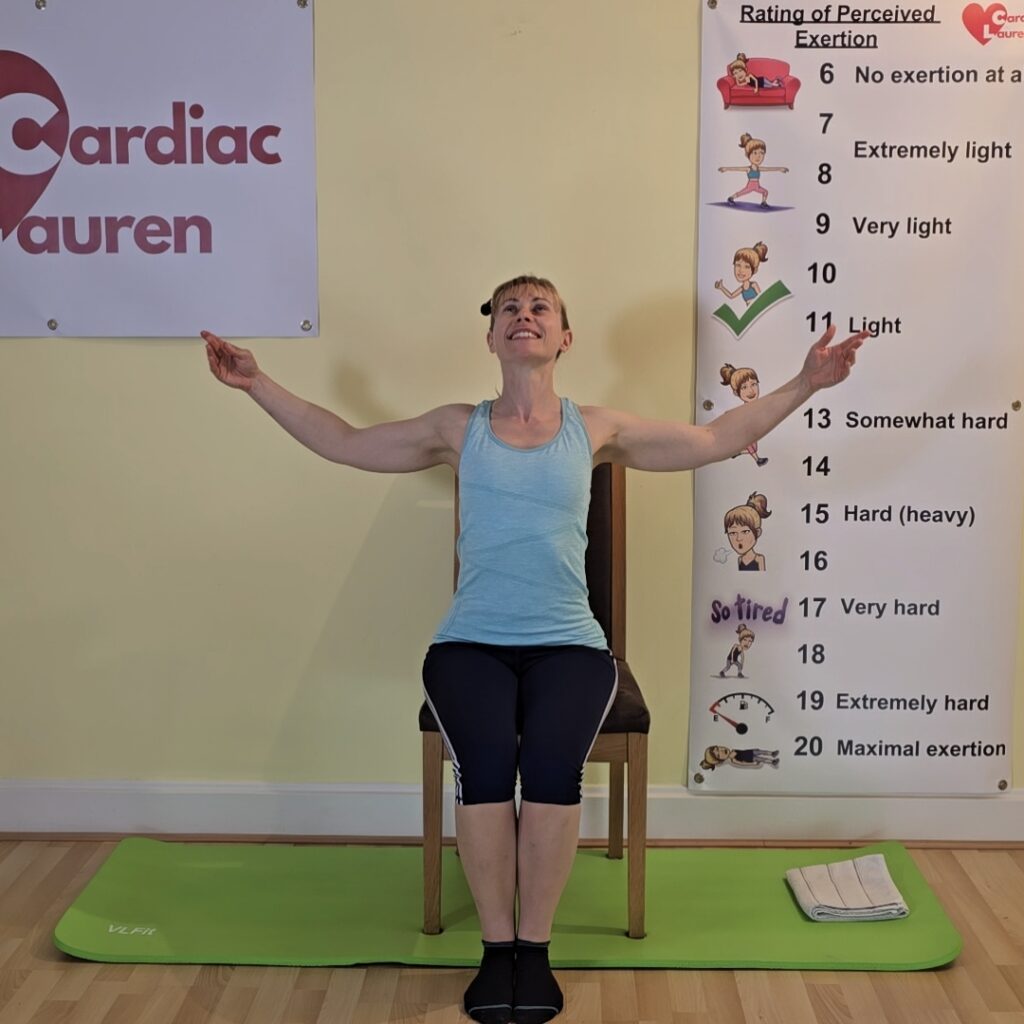
Why is a gradual cool-down especially important in cardiac rehabilitation?
People living with heart conditions often need a little longer for their heart and circulation to recover after exercise.
A gradual cool-down helps avoid sudden changes in heart rate and blood pressure while your cardiovascular system returns towards its resting level.
It also gives you time to notice how you’re feeling after exercise, allowing your breathing and effort levels to settle before finishing the session.
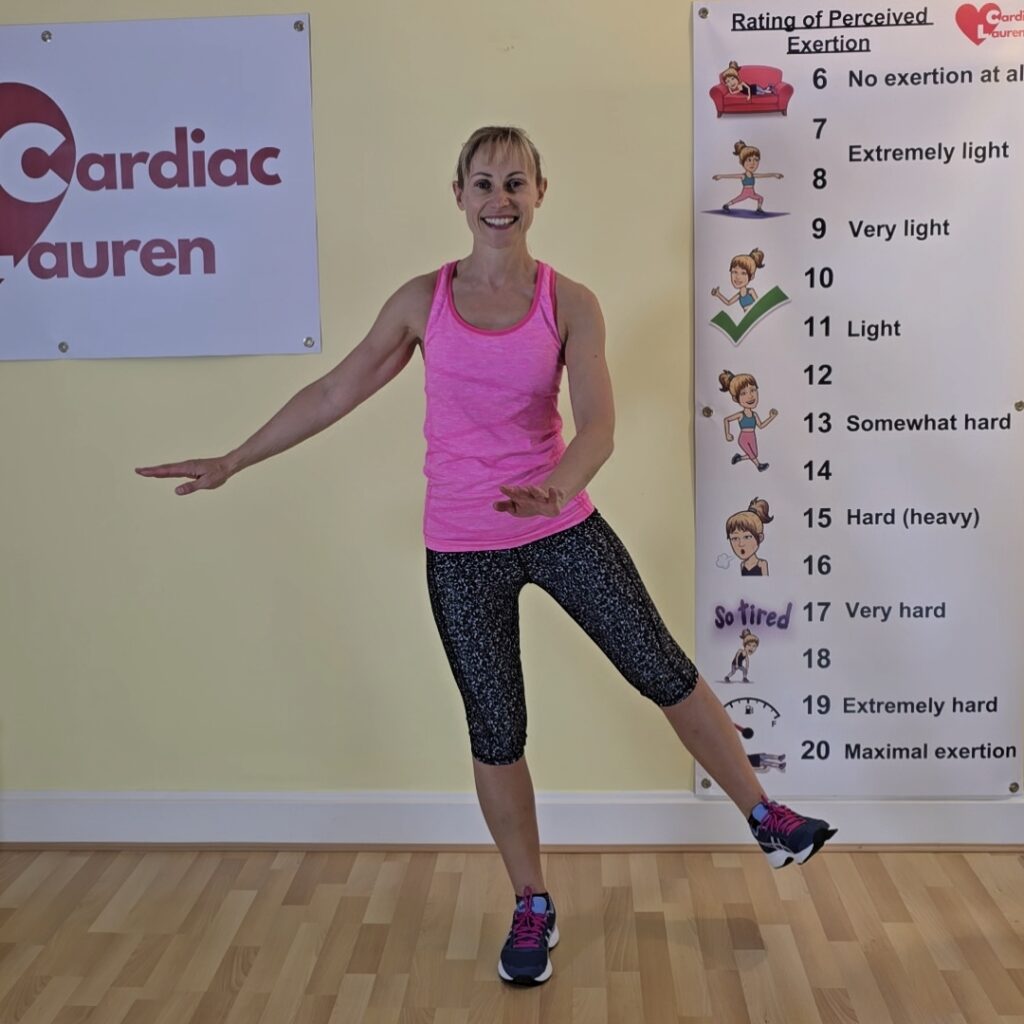
Throughout the cool-down, I encourage members to use the Rate of Perceived Exertion (RPE) Scale.
The cool-down begins at around RPE 11 — the same effort level your main exercise session finishes at — and gradually reduces from there. By the end of the session, we’re aiming to have brought this down to around RPE 7-8, or closer to RPE 6 if you plan to sit and rest afterward rather than stay gently active.
Are there other benefits of cooling down?
Yes.
As well as helping your cardiovascular system recover, a cool-down can also:
- Reduce feelings of dizziness after exercise
- Help your muscles begin recovering
- Improve flexibility through gentle stretching
- Encourage relaxation after physical activity
- Give you time to rehydrate before continuing with your day
Many members also tell me that the cool-down is one of their favourite parts of the class because it’s a chance to slow down, reflect on what they’ve achieved and finish feeling calm and positive.
Frequently Asked Questions
How long should a cool-down be after cardiac rehabilitation exercise?
A cool-down should ideally last around 10 minutes, although this may be longer after more demanding exercise sessions.
Can I skip the cool-down?
I wouldn’t recommend it.
The cool-down is an important part of exercising safely, particularly for people living with heart conditions. It allows your body time to recover gradually rather than stopping suddenly.
Why do we keep our feet moving during the cool-down?
Moving your feet helps your calf muscles continue pumping blood back towards your heart, supporting healthy circulation while your body recovers.
Why do Cardiac Lauren cool-downs vary?
Every class places different demands on the body, so each cool-down is tailored to the exercises you’ve just completed and the intensity of that particular session.
The Cardiac Lauren approach
For me, the cool-down isn’t simply the end of the workout.
It’s an essential part of exercising safely.
Every Cardiac Lauren cool-down is carefully designed to help your heart, circulation, muscles and mind recover gradually after exercise, so you finish each class feeling comfortable, confident and ready to enjoy the rest of your day.
If you’re looking for online exercise classes designed specifically for people living with heart conditions, I’d love you to join our supportive community.
Discover Cardiac Lauren Membership today
Author
Lauren Walker, Level 4 Cardiac Rehabilitation Exercise Specialist with the BACPR since 2005
BACPR ESA Committee member – since 2026 (Exercise Specialist Alliance)