
Blog

Meet cardiac rehabilitation specialist and ‘Cardiac Lauren’ founder, Lauren Walker

Finding a trusted cardiac rehabilitation specialist with expertise in Phase 1-4 rehabilitation can be tough. You want someone who understands cardiac disease inside and out and can offer you sound, safe advice with sensitivity and reassurance.

Not only that, but many people are also looking for cardiac rehabilitation classes which are accessible to everyone, no matter their age or location.

So where can you find a cardiac rehabilitation specialist who ticks all of these boxes?

Right here. 

What are a Cardiac Rehabilitation Specialist’s qualifications?

BACPR Revalidation Certificate - 28 Feb 23

Lauren Walker is a BACPR (British Association of Cardiovascular Prevention and Rehabilitation) qualified cardiac rehabilitation specialist with 18 years of experience under her belt.

BACPR is the Gold Standard in Cardiac Disease qualifications and must be re-validated every 3 years to keep up with modern practice and research (Lauren completed the most recent revalidation in March 2023 with a 97% pass rate).

Lauren’s knowledge includes, but is by no means limited to the anatomy and physiology of the heart and cardiovascular system; the complete cardiac rehabilitation process; medicine and risk stratification; emergency scenario training; and nutrition.

Not only is Lauren an experienced cardiac rehabilitation specialist, but she is also the founder of a successful online exercise community – Cardiac Lauren – where people with a history of various heart events can participate in safe and fun exercise classes from the convenience of their own home.

Cardiac Lauren brings together her extensive knowledge of cardiovascular health with her experience and love for sport and exercise. Lauren is no stranger to feel-good, high-energy exercise, as a level 4 exercise specialist, who has taught a mixture of circuit and aerobic style classes for many years.

Cardiac Lauren members can choose from a wide range of cardiac rehabilitation-targeted classes, to suit their confidence, ability and mood. Some of Lauren’s regulars don’t even have a history of a heart event – they just love Lauren’s friendly, energetic and inclusive style, and the chance to get a great workout in!

I love these videos. I find them extremely convenient because I can do them first thing in the morning and they set me up for the day without the hassle of going to a gym.

If it weren’t for Cardiac Lauren I wouldn’t get anywhere near 150 minutes of exercise a week. With them, I get well over. They have helped me get the habit of exercise and I’m sure that they play a big part in keeping me healthy at 66.

Although I haven’t had a cardiac event, I do have scoliosis and your videos complement the exercises that I’ve been given by the NHS.

I particularly appreciate your professionalism on how to exercise safely, especially the rate of perceived exertion. The videos I enjoy most are the ones with a mix of cardio, resistance and balance but I appreciate the variety of exercises that you offer and I do them all. And they are great value for money!

The fact that Lauren’s cardiac rehabilitation classes take place online also means that they are accessible to everyone, no matter where they live. Participants enjoy the convenience and security of exercising from the comfort of their own homes: no gym membership or expensive equipment is needed. In fact, the most you will need is a chair and milk cartons if you don’t own any lightweights.

Lesley Gall

Get to know Lauren a bit better by reading our short interview below, and hope to see you at the next online class!
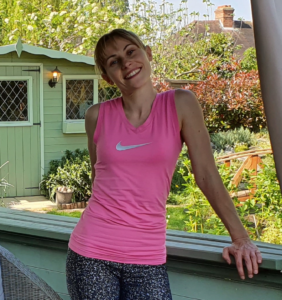
Cardiac Rehabilitation Specialist Cardiac Lauren - Balance on toes

How did you get into cardiac rehabilitation initially and become a cardiac rehabilitation specialist?

I was working as a gym instructor at my local gym and one day there were two older ladies struggling to set themselves up on the bikes. I went over, got them set up on a programme and stayed chatting whilst they exercised.

It turned out that they had not long completed their Phase 3 Cardiac Rehab programme and were just starting out in a Phase 4 gym-based class. At the end of the conversation, they persuaded me that I should speak to the person running the class and find out how I could qualify as I would be perfect in the role. The rest is history!

What is your favourite workout (or sport?)

Dancing is my main love. I started when I was 2 ½ and stopped doing ballet, tap and modern at 18 when I went to university. Since then I taught Line Dancing for 17 years, as well as Salsa and Rock ‘n’ Roll Jive. I miss dancing 3-4 times a week but I know one day I will get back to it.

I do enjoy walking, and I walk at a ‘scamper’ speed – around 4mph – and I enjoy cycling to work.

What is your favourite Cardiac Lauren ‘theme’?

I really enjoy the non-stop format as I love the challenge of making one exercise merge into the next. The other reason I like this theme is because it doesn’t involve any weights as my upper body is weak and I struggle to do many of the arm exercises!

Are there any fun facts about yourself that you’d like to share?

I like to do jigsaw puzzles and I challenge myself to do them without looking at the picture! This is why the Wasgij ones are perfect as the picture on the front of the box is not the picture in the puzzle.

What advice would you share with someone who is navigating the cardiac rehabilitation world?

Listen to your body and give yourself time. This doesn’t just relate to exercise, but to the other changes people may have to make to their lifestyles.

Allow your body to heal, allow your mind to recover from your heart event, work out a plan and strategy of how you are going to move forward and allow yourself to fail sometimes.

Remember to ask for help when you need the support to get back on track and have that fry-up every now and then as it will make you feel good!

Do you use music in your classes? What’s your favourite workout song?

Body Conditioning 4_ Disco Fusion - Pure energy Go

Yes, music is very important when exercising as it helps encourage us all, plus it can sometimes make it easier to exercise when you are singing along to the tunes. 

Sadly the UK music licences do not allow us to play the 50s, 60s, Motown and 70s music online that I can play in my face-to-face classes, but there are some good disco, salsa, 80s and Afro beats tunes that I can play.

I was brought up listening to Captial Gold on the radio so I love all the 60s tunes, and I learnt all the 50s tunes when I taught Rock ‘n’ Roll Jive so they are my favourite. For the online music, there is a Salsa track that has a wonderful beat and feel to it and I love hearing it.

I’m a ‘technophobe’ and am afraid that I won’t be able to navigate online classes – can I still attend your classes?

As long as you can sign into the members area of the website everything is easy to find. You can even stay logged in so you do not have to remember your password each time you want to do a class.

You can find the most recent classes under the main title Class Timetable, plus there are options for all the different themes of classes on the right-hand side so you can go straight to the section you want.

Can people in Phases 1-3 get involved in your classes?

Cardiac Lauren is for Phase 4 onwards, so come and join us when you have been discharged from Phase 3, or if you have been told you are at risk of a heart event. Signup here.

If you are still in Phase 3, I have some specialist exercise videos you can access on my website and participate in alongside the face-to-face classes that your NHS team provide.

If you are in Phase 1 or 2 then I encourage you to just start walking on a daily basis, aiming to achieve 30 minutes of continuous walking after 4-6 weeks from your procedure. Being active daily at home is sufficient exercise for these Phases.

What to expect after having a mild heart attack

After a heart event, it is normal to feel anxious and unsure about your recovery. Many people aren’t sure about which activities they can resume and which to avoid, as well as understand the steps to their rehabilitation when they can return to work.

We believe that knowledge is power when it comes to recovering from a mild heart attack, in order for the individual to take back control of their health; avoid complications or setbacks; and continue to enjoy their life to the fullest.

Myocardial Infarction - Heart attack - Mild heart attack

What is a mild heart attack?

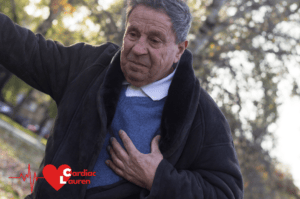
Older man walking and mild heart attack, angina, chest pain

The term ‘mild’ is used to describe a heart attack in which the blood supply to the heart becomes only partially blocked, as opposed to total blockage for a prolonged period of time. A ‘mild’ heart attack is formally known in the medical world as a Non-ST segment elevation myocardial infarction (NSTEMI) as opposed to the more severe ST-segment elevation myocardial infarction (STEMI). Nevertheless, a mild heart attack is still a serious medical event and one that can be deeply upsetting. The positive news is that recovery programmes are well-researched and trusted, to give you the best chance of avoiding future heart events and getting back to normal life. Many people make a full recovery from a heart attack.

Phase 1: What to expect after a mild heart attack while still in hospital

What to expect after having a mild heart attack

After a mild heart attack, you may remain in the hospital to receive medical treatment and undergo diagnostic tests to determine the extent of damage to your heart. This is known as ‘Phase 1’ and the main goals during this time are to stabilise the patient, prevent further damage and initiate treatments to help the heart muscles recover.

Your hospital treatment plan in Phase 1 will depend on the severity of the heart attack and any underlying medical conditions you may have. Generally, treatment may include medications such as aspirin, nitroglycerin, beta-blockers, or statins to manage symptoms, improve blood flow to the heart, and reduce the risk of further heart attacks.

If you have had angioplasty or stents following your mild heart attack – a painless procedure used to open up narrowed or blocked arteries – you can expect to be in the hospital for about 2-3 days. Any other procedures or surgeries follow more severe (STEMI) heart events, where recovery time in the hospital will be longer.

Heart, blood flow through a healthy artery,, blocked artery, angiogram, Angioplasty Stent PCI
Left: the heart with veins and arteries. Top right: blood flowing through a healthy artery.
Bottom right: blocked artery, angiogram, angioplasty, stent fitted into the artery.

You may also receive consultation on lifestyle changes you should make, such as adopting a heart-healthy diet, quitting smoking, reducing alcohol consumption, and engaging in regular physical activity.

When your doctor decides that you are in a stable condition to go home and begin your recovery, you will be discharged from the hospital. The summary notes from the hospital will have been forwarded to the local NHS cardiac rehabilitation team and they will make contact by phone.

For more information about Phase 1 after a mild heart attack, click here.

Phase 2: what to expect after a mild heart event after hospital discharge

Recovering from a heart attack at home can be a gradual process which requires the patient to be disciplined and proactive about their health. Alongside the NHS cardiac rehabilitation team who you will be in contact with, you will be responsible for your own recovery – but don’t worry: the main thing to do in Phase 2 is rest and take it easy.

You can expect to feel tired and sluggish when you return home, however, the key here is to continue doing light household activities. These include getting up and getting dressed in the morning; washing; making hot drinks; going up and down the stairs; washing up and going for short walks.

It is recommended that a trusted person stays with you to help out, however, you should also try to be as independent as possible.

Aside from rest, you will need to follow the instructions given to you by your doctor, which are likely to include taking medication at the correct times. Other tasks you will need to do as follows:

Remember to:

cardiac nurse phase 2 recovery at home cardiac rehab
  • Take your discharge letter from the hospital to your GP or ask a loved one to do it. This allows your GP to know about your heart attack and the treatment you’ve had.
  • Make an appointment to see your GP within the first couple of weeks of being home so that you can get a repeat prescription for your medicines.
  • Take your medication according to your schedule.
  • Attend your follow-up appointment at the hospital.
  • It is also important to look out for your mental well-being after a mild heart attack. It is common to feel anxious, depressed, overwhelmed or hopeless after this upsetting event.

You can visit the British Heart Foundation’s emotional support page here. They also have an online magazine called Heart Matters about learning to cope with your diagnosis – Cardiac Lauren is a fan of this magazine. 

Mind is also a mental health charity with many resources to support you. Why not check out their online community, Elefriends, to chat with those who might be experiencing the same feelings as you?

You could also visit the NHS self-help webpage to read about online or remote services that can improve your mental well-being.

For more information about Phase 2 after a mild heart attack, click here.

Phase 3: your active recovery programme after a mild heart attack

In Phase 3, education, exercise and support from a multidisciplinary team are put together in a 4–12-week programme. The primary goal of Phase 3 cardiac rehabilitation is to help individuals return to their normal daily activities and improve their overall health and well-being.

The individual takes on more responsibility for their recovery after the mild heart event, as they build up to be able to complete 20 minutes of continuous activity safely (being able to monitor their own capability and intensity). 

Patients will become very familiar with RPE, which stands for Rating of Perceived Exertion, during Phase 3 recovery. This is a subjective measure of how hard someone feels they are exercising – to help people gauge their intensity level during physical activity. Anywhere between RPE 11 & 14 is generally desired – i.e. ‘fairly light’ to ‘somewhat hard’.

Phase 3 recovery after a mild heart attack sees the patient become physically stronger and more knowledgeable about their condition.

More information about Phase 3 recovery after a mild heart attack can be found here.

Phase 4 recovery after a mild heart attack

Phase 4 cardiac rehabilitation is where the fun starts! You will have built up strength and a generally enhanced well-being after your Phase 3 exercise and education programme, which means you are now ready to start reaping the benefits of regular fun, challenging and, crucially, safe exercise. 

Joining Phase 4 cardiac rehabilitation exercise classes can be life-enhancing and build your strength, mood and confidence while living with a history of a mild heart attack. 

Cardiac Lauren offers friendly and convenient online classes to suit all Phase 4 patients after a mild heart event – whether they are used to regular exercise or are just starting their fitness journey. 

My participants love the fact that they can choose when to exercise and which style and intensity of class to do each time. 

Choose your plan and get started here.

Welcome to My NEW Website

The Cardiac Lauren website has been redesigned to make it even easier and more fun to use. This isn’t just a new theme, it’s a complete rebuild from the ground up, with a focus on ease of use and speed. I’ve also expanded the range of free information available. My new Resources section has information … Read more